
Published: September 2026 | Industry: Construction & Building Materials
The global concrete block and masonry manufacturing industry is undergoing a profound transformation in 2026, driven by booming infrastructure investment, stricter green building policies, and rapid factory automation upgrades. Latest market intelligence and industrial reports confirm that the concrete block industry is maintaining steady high growth, with the global market projected to reach US$562.7 Billion by 2033 at a compound annual growth rate of 5.2%. Emerging trends centered on low-carbon production, recycled material utilization, and full-line automation are reshaping the competitive landscape of the global block manufacturing sector.
Surging Global Demand Led by Infrastructure and Affordable Housing
2026 witnesses a strong rebound in global construction activities. Urbanization expansion, large-scale infrastructure renovation, and government-led affordable housing projects have become the core driving forces for the continuous growth of concrete block consumption.
Industry data shows that urbanization demands contribute 55% of market growth, while infrastructure expansion and residential housing projects account for 47% and 42% respectively. In developed economies, the year-on-year demand growth rate of hollow concrete blocks has exceeded 9%, while emerging markets in Southeast Asia, Africa, and South America present stronger market potential with rapid growth in civil construction and factory building demands.
Regionally, the Asia-Pacific region dominates the global concrete block market with a 38% market share, ranking first worldwide. North America and Europe follow closely with 24% and 23% shares, and the Middle East and Africa market maintains stable growth relying on long-term infrastructure construction plans.
Green Low-Carbon Becomes Mandatory Industry Standard
Against the global dual-carbon background and updated green building codes, environmental performance has evolved from a competitive advantage to a basic industrial threshold in 2026.
Newly implemented international and national construction standards raise strict requirements for building energy conservation, wall insulation, and solid waste recycling. Statistics indicate that 41% of mainstream block manufacturers have fully adopted recycled aggregates such as fly ash, slag, and construction waste in production. The reuse rate of industrial solid waste in block production has increased significantly, effectively reducing production carbon emissions while improving the compressive strength and durability of finished blocks by about 12%.
Lightweight thermal-insulation concrete blocks and composite self-insulation blocks have become hot-selling products in 2026. These new-type blocks integrate load-bearing, heat preservation, and sound insulation functions, which can perfectly adapt to upgraded energy-saving building standards and greatly shorten on-site construction cycles. More than 37% of global construction projects have prioritized energy-efficient lightweight blocks to meet green building certification requirements.
Full Automation Upgrades Reshape Factory Production Mode
Labor shortage and rising labor costs further accelerate the intelligent transformation of block production lines in 2026. Industrial surveys show that over 54% of hollow block manufacturers and 44% of solid block manufacturers have completed or upgraded fully automated production systems this year.
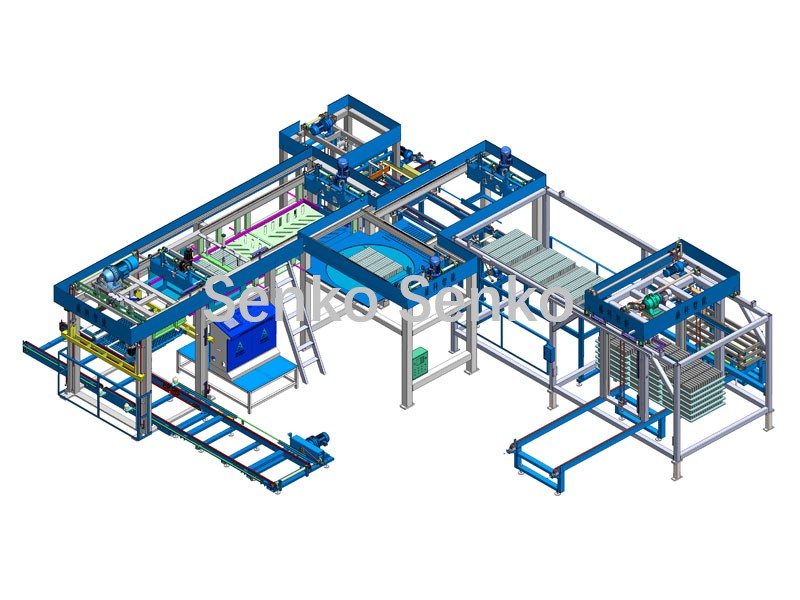
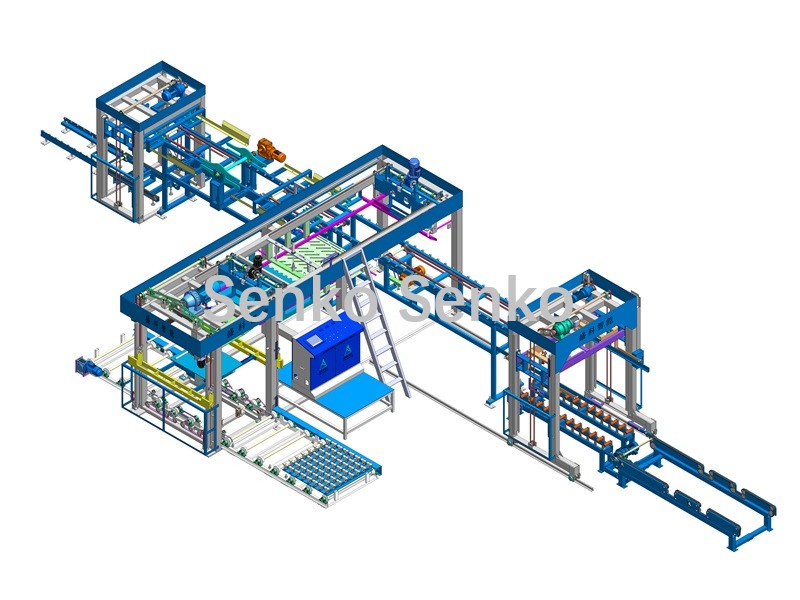
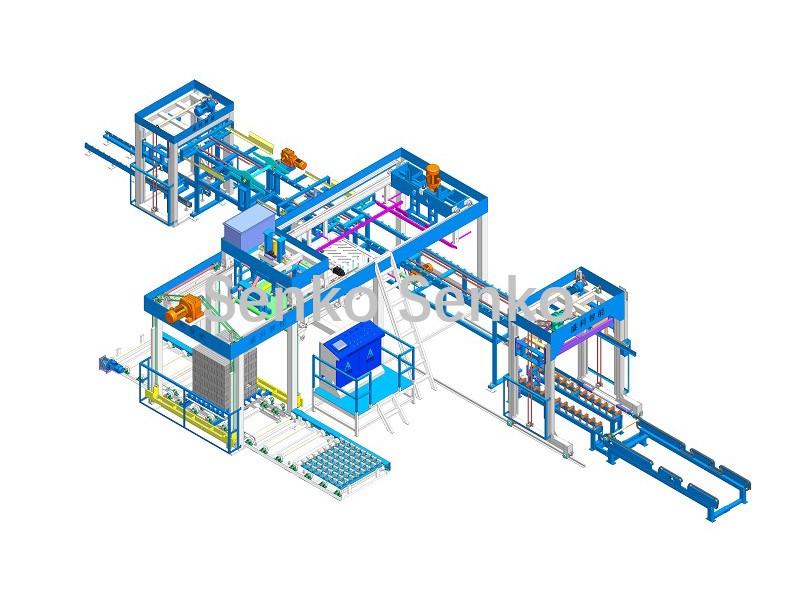
Traditional semi-manual production modes are being phased out rapidly. Modern intelligent block production lines realize automatic feeding, pressing, molding, stacking, and palletizing throughout the whole process. More than 41% of factories have equipped robotic palletizing systems, which drastically reduce labor dependence, lower human error rates, and improve daily output stability.
Standardized daily inspection procedures and intelligent parameter calibration systems have become standard configurations for qualified manufacturers, effectively reducing equipment downtime and defective product rates. Automated production not only improves production efficiency by 30%–50% but also ensures consistent block size, density, and compression resistance, meeting high-standard engineering construction requirements.
Industry Leading Brands Focus on Innovative Sustainable Development
In 2026, top international building material enterprises continue to lead industrial innovation. Leading European brand Wienerberger held the 2026 BRICK AWARD ceremony, emphasizing sustainable design, climate-resilient building materials, and energy-efficient construction solutions, guiding the industry to move toward high-value green manufacturing.
Meanwhile, mid-stream equipment manufacturers and block producers are constantly optimizing production formulas and equipment structures. The industry has formed a clear development consensus: future market competition will focus on low-carbon production capacity, automated manufacturing level, and high-performance customized block products.
Industry Outlook for Late 2026 and 2027
Industry analysts predict that the global concrete block market will maintain continuous growth in the next 1–2 years. Three major trends will dominate the industry development:
First, the penetration rate of recycled raw materials will continue to rise, and zero-carbon and low-emission production lines will become the mainstream configuration of new factories.
Second, full-intelligent unmanned production lines will further popularize, and small and medium-sized manufacturers will accelerate backward equipment elimination and technological upgrading.
Third, functional customized blocks (thermal insulation, fireproof, lightweight, high-strength) will replace ordinary traditional blocks and become the mainstream demand of high-end construction projects.
In general, the concrete block industry is stepping into a new era of green, intelligent, and high-quality development. Manufacturers with advanced automated equipment, mature environmental protection production technology, and stable product quality will occupy the dominant position in the global market.
FAQ
Q1: What is the core growth driver of the 2026 global concrete block industry?
A1: The main driving factors include global infrastructure expansion, affordable housing construction demand, stricter green building energy-saving policies, and the comprehensive upgrading of factory automated production technology.
Q2: What type of concrete blocks are most popular in the 2026 market?
A2: Energy-saving lightweight hollow blocks, composite thermal-insulation blocks, and high-strength recycled aggregate blocks are the best-selling products, which meet green building standards and reduce overall construction costs.
Q3: Why is automated block production line upgrading essential in 2026?
A3: Automated production solves labor shortage problems, improves production efficiency and product consistency, reduces defective rates and equipment failure risks, and meets the unified quality requirements of international engineering projects.
Q4: How does the recycled material trend affect block manufacturing factories?
A4: Factories that adopt industrial waste and construction waste as raw materials can reduce raw material costs, lower carbon emissions, meet environmental certification standards, and gain more green engineering project bidding qualifications.
Q5: Which regional market has the greatest development potential in the future?
A5: The Asia-Pacific region maintains the largest market share, while Africa, Southeast Asia and Latin America will become the fastest-growing emerging markets in the next two years due to large-scale infrastructure construction demands.
Sales : No.33,Jinhe Avenue,Binjiang Development Zone, Daxiamei Area,Nanan County,Quanzhou City, Fujian,China
Call Us Now : +8615559090996
Email : senko@fjsenko.com