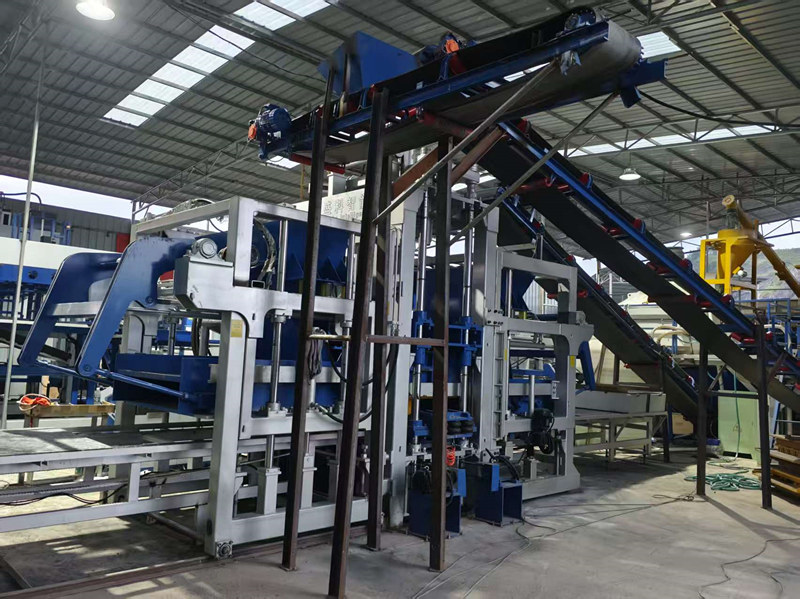
• Why the Middle East is Building its Future with Brick & Block Plants? Feb 04, 2026
    The skyline of the Middle East is a testament to ambition. From the record-breaking towers of Dubai to the futuristic cityscapes rising in Saudi Arabia, the region is engaged in a historic period of construction and development. This growth isn't slowing down; it's accelerating, driven by national visions and economic diversification plans. For manufacturers in the building materials sector, this presents a fundamental question: is there a real, sustained need for more brick and block production lines? The resounding answer, backed by market data and on-the-ground activity, is yes.   Here’s a look at the forces driving this demand and how Quanzhou Senko Equipment Manufacturing Co., Ltd., with our deep roots in Fujian's manufacturing hub, is positioned to be your ideal partner in this dynamic market.   A Market in Motion: Sustained Demand for Building Blocks   The demand for concrete blocks and bricks, the essential building blocks of any infrastructure, is directly tied to construction activity. Across the Middle East, several powerful trends are converging to create a robust and long-term market for production equipment:   National Mega-Projects: Gulf nations like Saudi Arabia are pouring billions into transformative projects under initiatives like “Saudi Vision 2030,” which aims to diversify the economy and develop new sectors. This vision translates into massive investments in infrastructure, including the construction of entire new cities, economic zones, and tourism destinations. These projects require staggering volumes of standardized, high-quality building materials.   Post-Conflict Reconstruction: In other parts of the region, such as Iraq, the focus is on rebuilding critical infrastructure. Recent contracts for new production lines, like the 750t/d brick plants in Iraq, highlight a clear drive to develop local manufacturing capacity to support reconstruction efforts.   Established Market Growth: Even in more developed markets like the UAE, the concrete block and brick manufacturing sector shows a positive forecast through 2031, indicating steady, ongoing demand.   The evidence is clear in the business moves of regional leaders. Major producers like Bahrain's Al Manaratain are expanding into Saudi Arabia with large new factories designed to produce tens of thousands of blocks daily. Similarly, Saudi Arabia's Al Kifah continues to upgrade and expand its network of plants to meet the needs of major government projects, including railways and port expansions.   How Senko Equipment Serves This Dynamic Market     For over a decade, Quanzhou Senko has been a trusted partner for clients seeking reliable, efficient, and profitable brick and block production solutions. We understand that entering or expanding in the Middle East requires more than just a machine; it requires a partnership. Here’s what we bring to the table:   1. Tailored Plant Solutions from Foundation to Production We move beyond simple equipment sales to provide complete plant solutions. We begin with a deep analysis of your specific business goals, local market demands (whether for hollow blocks, pavers, or specialized interlocking bricks), and raw material availability. Our engineering team then designs a production line that optimizes layout, workflow, and efficiency to ensure your investment delivers maximum return.   2. A Full Spectrum of Machinery for Every Business Scale We offer the right technology for your ambition and budget:   · High-Capacity, Fully Automatic Lines: For large-scale operations targeting mega-projects, our fully automatic lines with PLC control ensure maximum output (15,000+ blocks per day), unmatched consistency, and minimal labor costs. These systems are ideal for producing the vast quantities of high-specification blocks required by major developers. · Versatile Semi-Automatic Machines: For small to medium enterprises (SMEs), our robust semi-automatic models, like those in the QT series, offer an excellent balance of automation, output (4,000-8,000 blocks/day), and affordability. They are a proven choice for building a profitable business. · Specialized & Adaptive Technology: We provide equipment engineered for regional challenges. This includes systems designed for stability in sandy environments, compatibility with local raw material mixes, and configurations that support the growing demand for eco-friendly products like AAC (Autoclaved Aerated Concrete) blocks.   3. The “EPC+O” Model: Your Turnkey Partner Following the successful model used by leading Chinese engineering companies in the region, we offer integrated Engineering, Procurement, and Construction (EPC) services. We manage the entire process—from plant design and machine supply to installation, commissioning, and operator training. Furthermore, we offer optional long-term Operation & Maintenance (O&M) support, ensuring your plant runs smoothly and profitably for years to come.   4. Technology with Local Relevance Our machines incorporate features critical for success in the Middle East:   · Energy-Efficient Performance: Utilizing technologies like German frequency conversion control to significantly reduce electricity consumption, a major operational cost. · Durability for Demanding Conditions: Built with robust components and designs that withstand high-temperature, high-dust environments. · Smart Manufacturing Ready: We equip lines with smart production management systems for full process transparency, quality control, and data-driven optimization.   Building Success Together in the Middle East   The Middle East's construction boom is not a fleeting opportunity but a long-term structural shift. The strategic expansion of regional producers and the continuous launch of giga-projects confirm a sustained need for local, efficient, and high-quality brick and block production.   At Quanzhou Senko Equipment, we combine proven Chinese manufacturing excellence with a deep understanding of the Middle East's unique market demands. We don't just sell machines; we deliver profitable production solutions and act as a dedicated partner in your growth.   Ready to build your success story in the Middle East? Contact Quanzhou Senko Equipment today to discuss how our tailored block making solutions can help you capture a share of this thriving market. https://www.senkomachine.com/products  
  • Why do the African Countries need more block making machines in the future? Jan 28, 2026
    African countries will need significantly more block making machines in the future due to a powerful combination of rapid urbanization, massive infrastructure deficits, proactive industrialization policies, and a booming mining sector. This creates a sustained, large-scale demand for affordable and efficient construction materials.   Here are the key drivers behind this growing need:   🏙️ 1. Rapid Urbanization & Housing Crisis   Africa has the world's fastest urbanization rate. Cities are growing, but formal housing and infrastructure are not keeping pace. This creates an enormous demand for affordable housing and urban services. Block making machines are essential for producing the basic building blocks needed to close this gap at scale.   🏗️ 2. Major Infrastructure & Industrialization Push   Governments and international partners are investing heavily in infrastructure. The African Union's Agenda 2063 prioritizes industrialization, and projects like the African Continental Free Trade Area (AfCFTA) will require upgraded roads, ports, and factories. These large-scale projects consume massive amounts of concrete blocks and bricks. For instance, Nigeria's government has made construction a top priority to address its infrastructure deficit.   ⛏️ 3. Mining and Resource Development   Africa is rich in minerals critical for the global energy transition. Developing new mines requires extensive on-site construction—from worker housing to processing plants—all of which rely on locally produced building materials. The DR Congo, a major cobalt producer, is a prime example of this link between resource extraction and construction booms.   💡 4. Shift Toward Localized, Efficient Production   There's a growing trend to move away from expensive, imported materials or traditional, labor-intensive methods. Modern block making machines offer compelling advantages:   · Cost & Speed: They produce cheaper, standardized blocks faster than manual methods. · Quality & Innovation: They enable the production of interlocking blocks (which require less or no mortar) and the use of alternative materials like compressed earth, which is sustainable and ideal for local climates. · Job Creation: Small to medium-scale block production can become a viable local business, supporting entrepreneurship.   📊 Summary of Key Drivers   Driving Factor Key Implication for Block Machine Demand Urbanization & Housing Massive need for affordable housing units and urban infrastructure. Infrastructure Projects Large-scale government and international investments in roads, ports, and energy. Industrialization Policy Direct government support for manufacturing and local construction material production. Mining Development On-site construction needs for resource extraction projects across the continent.   ⚙️ Practical Considerations for the Market   For companies like Quanzhou Senko Intelligent Equipment Manufacturing Co.,Ltd success in this market requires understanding that cost-effectiveness, adaptability, and training support are crucial. Machines must be affordable, robust enough for local conditions, and capable of using locally available materials (like soil or fly ash). Providing strong after-sales service and operational training will be a key competitive advantage.   In conclusion, the demand for block making machines in Africa is fundamentally driven by the continent's development trajectory and economic transformation. It represents a sustained market opportunity linked directly to building Africa's future cities, industries, and infrastructure. As a machine manufacturer, Quanzhou Senko Intelligent Equipment Manufacturing Co.,Ltd produce intelligent equipments: brick/ block forming machines, stacking machines,  packing/ stripping machines; RGV transfer cars; palletizers;film wrapping / laying machine and full brick/block production line solutions,etc.   
  • Why do the foam concrete production lines become popular?
    Why do the foam concrete production lines become popular? Jan 26, 2026
    Foam concrete production lines have become popular primarily because they address several critical modern demands in construction: sustainable building, energy efficiency, and industrial automation. The resulting material is lightweight, insulates well, and the production process itself is environmentally friendly and efficient.   Here are the core reasons behind its growing popularity:   🏭 Production & Efficiency   · Automation: High degree of automated control from batching to curing, ensuring stable quality and reducing labor. · Simplified Process: The "non-steaming" process for blocks eliminates energy-intensive high-pressure steam curing, cutting costs. · High Yield: Automated lines enable large-scale, continuous production to meet market demand.   🧱 Material & Performance   · Lightweight: Density is 1/4 to 1/2 of clay bricks, easing transport and structural load. · Superior Insulation: Abundant pores provide exceptional thermal and sound insulation, ideal for energy-saving buildings. · Good Strength: Achieves required mechanical properties for wall materials through optimized mixes.   💰 Cost & Investment   · Low Initial Investment: Estimated at 20%-30% of traditional steam-cured block lines. · Low Operating Cost: Uses industrial by-products as cheap raw materials and saves energy. · Clear Profit Model: Example shows an annual output of 300,000 m³ can yield tens of millions in profit.   ♻️ Sustainability   · Waste Utilization: Consumes large amounts of fly ash, slag, etc., turning waste into resources. · Green Production: No waste water, smoke, or dust during process; conserves land. · Energy Saving: Contributes to lower building energy consumption due to its insulating properties.   📈 Market Validation and Future Trends   The strong market growth proves this trend is data-driven. In China, the equipment market grew from 4.32 billion RMB in 2019 to about 14 billion RMB in 2023, a compound annual growth rate of over 34%. It's projected to exceed 20 billion RMB by 2028. Globally, the market is also expanding steadily.   Future developments will focus on:   · Enhanced Performance: Using nanotechnology and new additives (like graphene) to improve strength and insulation further. · Intelligent Manufacturing: Deeper integration of IoT and AI for smart, flexible production. · Product Diversification: Development of multi-functional composite panels (e.g., integrated with photovoltaics) for broader applications.   💎 Conclusion   In short, the popularity of foam concrete production lines stems from their ability to produce a green, functional, and cost-effective building material with an efficient and sustainable manufacturing process. It aligns perfectly with global trends in green buildings, industrial upgrades, and solid waste recycling.   As a machine manufacturer, We prouduce intelligent equipments: brick/ block forming machines, stacking machines,  packing/ stripping machines; RGV transfer cars; palletizers;film wrapping / laying machine and full brick/block production line solutions,etc.  
  • Any requirements of the site of new block making factory?
    Any requirements of the site of new block making factory? Jan 20, 2026
    Setting up a block making factory requires considering both physical site requirements and regulatory approvals. Here are the key requirements based on industry practices and regulations.   🏭 Core Physical Site & Infrastructure Requirements   · Adequate Space: You need enough land for production halls, raw material storage (covering 30-40% of factory needs), and finished product storage (also 30-40% of production) . Buffer stocks between workstations are essential to prevent production halts . · Key Site Features: The site must have good access roads for material delivery and block dispatch . A hard, flat ground surface (like concrete) is non-negotiable for stable block stacking . In dry, warm climates, plan for shelters to protect workers and certain processes from sun and dust . · Utility Connections: Reliable access to water (for mixing) and electricity (for motorized equipment) is fundamental . For larger or more advanced setups, you'll need to plan comprehensive systems for power, water supply, drainage, and other pipelines . · Factory Layout & Setbacks: Buildings must maintain minimum distances from boundaries: typically at least 13.5 meters from the front road and 6 meters from side and rear fences.   📜 Regulatory & Environmental Compliance   · Pollution Control: Check local "distance criteria" from residential areas. For example, in Kerala, India, large factories (≥1 tonne/day) must stay 25 meters away from homes, while smaller ones may be exempt . · Construction Permits: In many regions (like China), you must obtain a "Construction Engineering Planning Permit". This requires prior documents like the land-use permit, project approval/filing, and an environmental impact assessment . · Building & Zoning Codes: Local regulations dictate industrial building specs, including minimum ceiling heights (often 4.5+ meters), spacing between buildings for fire safety, and limits on non-production facilities .   ⚙️ Strategic & Operational Factors   · Location Logic: Choose a site close to raw material sources (like soil/quarries) and your target market to minimize transport costs . · Scale & Process Design: Your target productivity dictates the scale of everything. The choice between manual, semi-mechanized, or fully mechanized production lines affects space, labor, and investment needs . · Comprehensive Planning: A detailed plan should cover the production cycle, equipment layout, and all auxiliary facilities (e.g., offices, worker amenities, labs for quality control) .   📍 How to Proceed with Your Project   To get specific and actionable information, you need to define three key things:   1. Planned Location: Country, state/province, and city. Regulations vary greatly by region . 2. Factory Scale & Type: Estimated daily production output (e.g., number of blocks or tonnes per day) and the type of blocks (hollow, solid, interlocking, compressed earth). 3. Project Stage: Are you conducting a feasibility study, looking for land, or preparing permit applications?   With more details, I can try to help you find more location-specific regulations or standards. For precise requirements, you should always consult with local urban planning authorities, industrial park administrations, and a civil engineer or factory consultant familiar with local codes. As a machine manufacturer, We produce intelligent equipments: brick/ block forming machines, stacking machines,  packing/ stripping machines; RGV transfer cars; palletizers;film wrapping / laying machine and full brick/block production line solutions,etc.
  • How to make a block-making factory profitable today? Jan 19, 2026
    Making a block-making factory profitable today requires a strategic focus on cost control, operational efficiency, and market adaptability. Based on industry reports and operational studies, here are the key pillars for profitability.   📊 Five Pillars of a Profitable Block Factory   Pillar Key Actions & Strategies Impact on Profitability 1. Cost & Raw Material Control Use alternative aggregates (e.g., recycled materials); source materials locally; implement precise cost accounting. Directly increases margins by reducing the largest variable cost; studies show using recycled rubber can lower production costs by ~5%. 2. Production Efficiency & Automation Invest in automated, high-capacity machines; optimize factory layout and workflow; achieve economies of scale. Boosts output and reduces unit cost; automation can increase daily production by over 100%, significantly raising sales and margins.( take Quanzhou Senko Intelligent Equipment Manufacturing Co.,Ltd for example) 3. Market & Product Strategy Secure demand from local construction projects; offer a product mix and transport services; balance make-to-order and standard production. Ensures sales stability and premium pricing; becoming a one-stop shop (blocks + delivery) increases customer loyalty and revenue streams. 4. Financial & Data-Driven Management Analyze product profitability (e.g., revenue vs. margin quadrant); track KPIs (on-time delivery, OEE, inventory turnover). Enables smart decision-making; helps focus resources on high-profit products and identifies operational bottlenecks. 5. Business Model & Sustainability Diversify into related building materials (e.g., pavers, kerbs); offer value-added services; adopt eco-friendly practices. Future-proofs the business; creates new revenue streams and appeals to modern, environmentally-conscious markets and regulations.   🛠️ Practical Implementation Roadmap   To build or transform a factory, follow these stages:   Stage 1: Foundation & Planning (Pre-Investment)   · Validate Demand: Research local and regional mid-term infrastructure and housing plans to ensure a stable market. · Strategic Location: Choose a site close to both raw material sources and your target market to minimize transport costs. · Business Model Design: Decide if you will be a pure producer, a producer with transport, or a full-range building material supplier.   Stage 2: Optimization & Execution (Operational)   · Costing Model: Develop a detailed cost model to know the true cost per block for each product type. · Go Automated: For new setups or major upgrades, prioritize semi or fully automatic machines from the start for higher quality and output. · Measure Performance: Implement a KPI dashboard to regularly review production efficiency, delivery rates, and quality pass rates.   Stage 3: Strategic Growth   · Product Portfolio Analysis: Regularly use a profitability quadrant analysis to identify star products and phase out unprofitable ones. · Innovate: Continuously explore new raw material mixes and product designs (like insulated blocks) to stay ahead.   The most profitable factories today are not just manufacturing sites; they are efficient, market-responsive, and strategically managed enterprises. The shift from manual to automated production is often the single most impactful decision for scaling profitability.  
  • From Trash to Treasure: China's New Blueprint for Solid Waste Revolution Jan 15, 2026
    From Trash to Treasure: China's New Blueprint for Solid Waste Revolution   "Solid waste should not be viewed as trash, but as valuable resources that are currently mismanaged." — Zhou Haibing, Deputy Head of China's National Development and Reform Commission    Imagine a world where yesterday's industrial slag becomes tomorrow's building materials, where agricultural waste transforms into valuable feed and fertilizer, and where the very concept of "waste" gradually disappears from our vocabulary. This vision underpins China's groundbreaking "Action Plan for Comprehensive Treatment of Solid Waste," unveiled in January 2026—a policy that represents not merely incremental change, but a fundamental reimagining of how the world's second-largest economy manages the 110+ billion tonnes of solid waste it generates annually .   As China grapples with the environmental legacy of rapid industrialization and urbanization, this plan marks a decisive pivot from end-of-pipe solutions to a holistic, lifecycle approach. With ambitious targets set for 2030 and concrete strategies spanning industrial, agricultural, and municipal sectors, the initiative provides a fascinating case study in environmental governance at scale—and potentially a template for other industrializing nations facing similar waste management challenges.   The Plan at a Glance: China's First Comprehensive Solid Waste Policy   The Action Plan, developed by China's National Development and Reform Commission (NDRC) in collaboration with 24 other government departments, represents a milestone in environmental policy . Unlike previous fragmented approaches to different waste streams, this marks China's first systematic, comprehensive deployment specifically targeting solid waste management—completing the nation's environmental policy framework alongside previously established water, soil, and air pollution control measures .   Core Quantitative Targets by 2030:   · Annual bulk solid waste utilization: 4.5 billion tonnes · Annual recycling volume of major renewable resources: 510 million tonnes    These staggering numbers reflect the scale of China's waste challenge—and its ambition to transform that challenge into economic opportunity. The plan fundamentally repositions solid waste from environmental liability to resource opportunity, explicitly stating that solid waste should be viewed "as valuable resources that are currently mismanaged" .   Five Strategic Pillars: From End-of-Pipe to Full Lifecycle Management   1. Philosophical Shift: From Treatment to Prevention   The plan's most significant conceptual breakthrough is its transition from end-of-pipe treatment to full-process prevention . This represents a complete reorientation of China's waste management philosophy, prioritizing source reduction and design innovation over downstream remediation.   2. Sector-Specific Strategies   Industrial Sector: Focuses on reducing waste generation intensity through green design and manufacturing while promoting high-value utilization of metallurgical slag, construction waste, and other industrial byproducts .   Agricultural Sector: Addresses the unique challenges of agricultural waste—seasonal, distributed, and costly to collect—through science-based approaches including straw-to-field returns, livestock manure recycling, and innovative biodegradable mulch films .   Municipal Sector: Emphasizes improved collection, sorting, and recycling systems, with particular attention to construction waste management in rapidly urbanizing areas .   3. Five Priority Areas for Special Attention   The plan identifies five areas requiring immediate, targeted intervention. Here's what each entails:   · Illegal dumping and disposal of solid waste: Combating unauthorized and environmentally harmful waste disposal practices. · Environmental hazards in municipal waste landfills: Addressing pollution risks from existing landfill sites. · Construction waste management challenges: Managing debris from urban development and renewal projects. · Legacy solid waste stockpiles: Dealing with accumulated waste from past industrial activities. · Phosphogypsum accumulation: Specifically targeting waste from fertilizer production .   4. Policy and Market Mechanisms   The plan advocates for a dual approach leveraging both institutional frameworks and market forces to drive the circular economy transition . This includes financial incentives for recycling projects, technological innovation funding, and requirements for manufacturers to incorporate recycled materials into their production processes .   5. Technological and Infrastructure Development   Acknowledging that policy ambitions require practical capabilities, the plan emphasizes strengthening R&D in key recycling technologies and developing the necessary processing infrastructure to support its ambitious utilization targets .   Implementation Framework: How the Plan Will Actually Work   Governance Structure: The plan establishes a multi-departmental coordination mechanism under NDRC leadership, ensuring alignment across the 25 participating government bodies . This addresses previous challenges of fragmented responsibility and competing priorities.   Regulatory Tools: Implementation will utilize advanced monitoring technologies including satellite remote sensing and drone surveillance to detect illegal dumping, supplemented by public reporting mechanisms .   Geographic Strategy: The plan expands "Waste-Free City" initiatives from current pilot programs to approximately 200 cities during the 15th Five-Year Plan period (2026-2030), with particular focus on key urban clusters including Beijing-Tianjin-Hebei, Yangtze River Delta, and Guangdong-Hong Kong-Macao Greater Bay Area .   Legal Foundations: The plan aligns with and supports China's ongoing environmental code compilation efforts, providing a policy framework that will be reinforced through subsequent legislative development .   Innovative Elements: Beyond conventional approaches, the plan introduces several innovative mechanisms, including requirements for local governments to allocate at least 1% of industrial land for resource recycling facilities—a concrete measure to address one of the recycling sector's most persistent challenges .   Beyond Waste Management: Broader Implications   The Action Plan's significance extends far beyond technical waste management considerations, touching on multiple dimensions of China's development trajectory:   Economic Transformation: By redefining waste as resource, the plan supports China's broader transition toward a circular economy model that could reduce raw material import dependence while creating new domestic industries around resource recovery and recycling .   Social Dimension: The explicit focus on waste streams "with direct impact on public health or workplace safety" recognizes the human dimension of environmental management, prioritizing interventions that deliver tangible quality-of-life improvements .   International Context: The plan positions China to take a more active role in global environmental governance, with stated intentions to "participate in international rule-making" for circular economy and solid waste management .   Challenges and Future Trajectory   Despite its comprehensive approach, the plan faces significant implementation challenges. China's vast geographic scale and regional diversity complicate uniform policy application, particularly for agricultural waste management which requires localized solutions . Additionally, the plan's success depends on changing long-established production and consumption patterns across multiple economic sectors simultaneously.   The true test will come in the coming years as the plan's detailed implementation measures unfold. Key indicators to watch include progress toward the 2030 utilization targets, expansion of the "Waste-Free City" network, and development of the technological and market infrastructures needed to support a genuine circular economy transition.   China's solid waste action plan represents perhaps the world's most ambitious attempt to systematically address the waste consequences of rapid industrialization. Its progress—and setbacks—will offer valuable lessons for all nations navigating the complex transition from linear to circular economic models in the 21st century.   As Zhou Haibing noted in presenting the plan, the core insight is recognizing that "solid waste should not be viewed as trash, but as valuable resources that are currently mismanaged" . This reframing—from waste as problem to resource as opportunity—may ultimately prove to be the plan's most enduring contribution, regardless of the specific metrics achieved by 2030.   The journey from theoretical recognition to practical implementation will be challenging, but the direction is clear: toward an economic model where nothing is truly wasted, and today's byproducts become tomorrow's resources.   As a machine manufacturer, We produce intelligent equipments: brick/ block forming machines, stacking machines,  packing/ stripping machines; RGV transfer cars; palletizers;film wrapping / laying machine and full brick/block production line solutions,etc.
  • Manual vs. Automatic Block Forming Machine Jan 12, 2026
    Whether you're setting up a small workshop or a large-scale production line, choosing the right block forming machine is a critical decision. This guide breaks down the two main paths—manual and automatic machines—to help you understand their operation, output, and which one is the right fit for your project.     Manual vs. Automatic: A Quick Overview   To start, here’s a snapshot of what each type offers:   Manual Block Forming Machines   · Automation Level: Fully manual operation. · Typical Output: 60-400 blocks per day. · Labor Required: 2-6 people. · Power Source: Human force or basic mechanical leverage. · Key Advantage: Very low initial investment. · Best For: Small-scale projects, remote locations, DIY builders, and soil block production.   Automatic Block Forming Machines   · Automation Level: Fully automated, computer-controlled cycles. · Typical Output: 4,000-15,000+ blocks per shift (8 hours). · Labor Required: Minimal (mainly for monitoring and maintenance). · Power Source: Electric motors and hydraulic systems. · Key Advantage: High, consistent output with minimal labor. · Best For: Commercial production, large construction projects, and producing high-strength, uniform blocks. Understanding Manual Block Presses   Manual machines are the most basic type, perfect for specific situations.   How They Work These machines use pure mechanical force, often through a lever or toggle mechanism, to compress material in a mold. An operator fills the mold, manually applies pressure to form the block, and then releases the finished product.   What You Can Expect   · Output: Production is measured in blocks per day, not per hour. A crew might produce 150-400 blocks in a day, heavily dependent on crew size and stamina. · Common Types:   · Soil Block Presses: Like the Meili 60 or Tek-Block, designed for stabilized earth construction.   · Simple Concrete Presses: Basic lever-operated machines for small concrete blocks or pavers.   Ideal Use Cases   · Building with Local Materials: Perfect for making compressed earth blocks (CEBs) using on-site soil. · Ultra-Low-Budget Startups: The lowest barrier to entry for a block-making business. · Community-Led or Self-Build Projects: Where labor is more available than capital for machinery.    Exploring Automatic Block Making Machines   Automatic machines represent the industrial standard for block production, offering a completely different level of efficiency.   How They Work These are complex, integrated systems. The core process—feeding material, distributing it into molds, high-frequency vibration compaction, and block ejection—is entirely automated and controlled by a Programmable Logic Controller (PLC). Advanced features often include automatic pallet feeders and stackers.   What You Can Expect   · Output: Production is measured in blocks per shift. A standard machine can produce thousands of blocks in an 8-hour period. · Key Advantages:   · Consistent Quality: PLC control and powerful vibration ensure every block has identical dimensions and high strength.   · Material Versatility: Can use standard concrete mixes as well as recycled materials like fly ash, slag, or crushed construction waste.   · Low Operational Labor: One operator can often manage the entire production line.   Ideal Use Cases   · Commercial Block Yards: Supplying the construction market with standard concrete blocks, pavers, and retaining wall units. · Large Infrastructure Projects: Producing blocks on-site for big developments. · High-Volume Production: Any operation where output, consistency, and speed are priorities.   The Middle Ground: Semi-Automatic & Mobile Machines   Not every project fits neatly into the manual or automatic categories. There's a practical middle ground.   Semi-Automatic "Egg-Layer" Machines Machines like the BlocMatic 4 series are a hybrid. They are mobile, often engine-powered, and automate the vibration and molding process. However, operators manually feed material and move the machine after each cycle to "lay" blocks on the ground—hence the name "egg-layer." They offer a good balance, producing 180-360 blocks per hour with a small crew.    How to Choose the Right Machine for You   Your decision should be based on a realistic assessment of your needs:   · Assess Your Scale and Demand: How many blocks do you need per day or week? Manual presses max out at a few hundred, while automatics start in the thousands. · Calculate True Costs: Consider the total cost. A manual machine is cheap to buy but expensive to operate due to high labor costs. An automatic machine requires a major upfront investment but has very low per-block labor costs. · Evaluate Your Resources: Do you have reliable electricity or fuel for an automatic machine? Do you have a skilled workforce or access to technical support for maintenance? · Define Your Product: Are you making simple solid blocks or specialized products like interlocking bricks, hollow blocks, or colored pavers? Automatic machines offer far greater versatility through mold changes.   Final Recommendations   · Choose a Manual Machine if: Your project is small, your budget is very tight, you are using on-site soil, or labor is readily available. Be prepared for physically demanding work. · Choose an Automatic Machine if: You are running a commercial business, have a consistent large demand, need uniform and certified products, or want to minimize long-term labor costs and physical strain. · Consider a Semi-Automatic if: You need higher output than a manual press can provide but aren't ready for the scale and investment of a full stationary automatic plant. They are excellent for medium-sized projects.   I hope this comparison helps clarify the right path for your block-making needs. If you can share more about your specific project scale, budget, and the type of blocks you want to produce, I can offer more tailored advice.  
  • The Complete Guide to Brick Block Packing & Strapping Machines Jan 05, 2026
    The Complete Guide to Brick Block Packing & Strapping Machines   In the demanding world of construction materials, brick and block packaging is the final, critical frontier. Every brick that shifts, cracks, or arrives damaged represents lost revenue and compromised project timelines. For decades, manual strapping was the standard, but it is increasingly being replaced by specialized, automated machinery designed to handle the immense weight, abrasive surfaces, and strict stability requirements of masonry products.   This guide explores the technology that is revolutionizing how bricks are prepared for shipment, ensuring they arrive on site ready for the job.   Why Brick Packaging Demands Specialized Machinery   Packaging bricks is a unique challenge. Their substantial weight (a single pallet can exceed 2,000 kg) and rough texture create high friction that can quickly degrade standard packaging materials. The primary goal is load stability—preventing movement during the jarring movements of transport, which can cause product damage, pallet collapse, and safety hazards. Automated strapping and packing machines are engineered specifically to solve these problems, applying consistent, high-strength restraint that manual methods cannot match.   Core Machine Types for Brick Packaging   Primarily, two advanced machine types dominate modern brick packaging lines: Automatic Pallet Strappers and Cross-Arm Strapping Machines.   1. Automatic Pallet Strapping Machines   These are heavy-duty, fully automated systems designed to secure pre-assembled pallets of bricks. They typically feature a robust steel frame that forms a "gate" through which the pallet passes. A strapping head, mounted on a moving carriage or gantry, applies polyester (PET) strapping in vertical, horizontal, or cross patterns.   · How They Work: The process is fully automated. A loaded pallet enters via conveyor. Sensors detect its position, and the machine applies, tensions, and heat-seals the straps with precise, repeatable force before ejecting the secured load. · Best For: High-volume production facilities with standardized pallet sizes, seeking maximum throughput and labor savings.   2. Cross-Arm (or "Sword-Type") Strapping Machines   These versatile machines are characterized by a movable "sword" or arm that physically carries the strapping around the load. This design is particularly effective for creating stable, pallet-less brick cubes and for applications requiring very tight bundling.   · How They Work: The machine's cross-arm extends, threads the strap through a pre-defined path around the stationary brick stack, retracts, and then tensions and seals the strap. The modular design allows the frame size to be customized. · Best For: Operations requiring flexible packaging formats, including pallet-less bundles, or those with space constraints where the load must be packed in a fixed position.   3. Additional Technologies in a Complete Line   Modern systems often integrate more than just strapping:   · Six-Side Wrapping Machines: For supreme protection against moisture, dust, and UV exposure, some lines add a stretch film wrapping station that encapsulates the entire brick cube in a protective plastic shell. · Robotic Handling: Industrial robots are increasingly used for de-stacking bricks from kiln cars and arranging them into precise layers or packs before strapping, maximizing flexibility and gentle handling.   Key Technical Specifications and Performance   When evaluating these machines, several technical factors are critical:   · Strapping Material: High-tensile Polyester (PET) strapping is the industry standard for its superior strength, durability, and resistance to abrasion and weather. Common widths for heavy brick loads are 12mm and 16mm. · Tension Force: Machines must generate significant, electronically controlled tension to secure loads, often ranging from 5000 N (approx. 510 kgf) for pallet strappers to systems capable of over 4000 N for specialized applications. · Throughput Speed: Efficiency is key. Automatic pallet strappers can typically process 15-20 pallets per hour, with a single strap cycle taking 15-30 seconds. More advanced modular systems can achieve cycle times as fast as 6 seconds per strap. · Customization: Machines are rarely one-size-fits-all. They are adapted to handle specific pallet dimensions (common ranges: 600-1200mm wide, 800-2400mm long) and varying load heights.   Tangible Benefits for Your Operation   Investing in automated brick packaging technology delivers measurable returns:   · Enhanced Product Integrity: Automated tension control creates a tighter, more uniform package that dramatically reduces brick movement, chipping, and breakage during transit. This leads directly to fewer customer complaints and less waste. · Substantial Labor Savings: Automating a strenuous, repetitive task frees workers for higher-value roles. One machine can replace multiple manual strapping stations, boosting overall line efficiency. · Improved Workplace Safety: Eliminating manual handling of heavy straps and tools reduces the risk of musculoskeletal injuries like strains and sprains. Creating consistently stable loads also makes them safer for forklift operators to move. · Reduced Operational Downtime: Modern systems like the modular Z-20 are designed for easy maintenance. Key components can be swapped out in minutes without heavy lifting equipment, keeping your production line running.   Implementation and Integration Considerations   Successfully integrating this technology requires planning:   1. Line Compatibility: Assess how the machine will interface with existing conveyors, brick stackers, and warehouse logistics. Floor space, height clearances, and power supply (typically 415V 3-phase) must be verified. 2. Material Selection: Partner with your supplier to select the optimal PET strapping grade, width, and thickness for your specific brick weight and stability requirements. The right consumable is crucial for performance. 3. Training and Support: Ensure operators and maintenance staff receive comprehensive training on machine operation, safety protocols (including emergency stops and guard systems), and routine preventive maintenance to ensure longevity in dusty brick plant environments.   The Future of Brick Packaging   The trend is toward fully integrated, smart packaging lines. Imagine a system where robotic arms depalletize and arrange bricks, sensors inspect for defects, a strapping machine applies custom-tensioned restraints based on load weight, and a final wrapper applies a protective and branded film—all with minimal human intervention and data fed to a central monitoring system.   This level of automation, as seen in advanced installations globally, is no longer a futuristic concept but a tangible path to greater resilience, efficiency, and quality in the heavy clay industry.     If you are looking to upgrade your brick packaging operations, the best first step is to consult with a specialized equipment provider. They can analyze your specific products, volume, and site constraints to recommend the optimal automated strapping solution. For further details on specific machine models and integration case studies, reviewing technical documentation from leading manufacturers is highly recommended.  
  • The Essential Role of the Block Soaking Machine in Concrete Production Dec 24, 2025
    The Essential Role of the Block Soaking Machine in Concrete Production Hey machinery fans and concrete pros! Following up on the block cuber, let's talk about another key player in the concrete block manufacturing line: the Block Soaking Machine (also called a concrete block curing soaking system or immersion curing machine). If you've ever wondered how freshly made concrete blocks gain their full strength without cracking or weakening, proper curing is the secret—and the block soaking machine makes it efficient and automated. What Is a Block Soaking Machine? A block soaking machine is specialized equipment that immerses stacks or pallets of green (freshly molded) concrete blocks in water tanks for curing. This water immersion method, also known as ponding or tank curing, keeps the blocks fully saturated, allowing the cement to hydrate properly and develop maximum compressive strength. Unlike steam kilns or air-drying yards, soaking machines use controlled water immersion—often for 7-14 days—to prevent moisture loss, reduce shrinkage cracks, and ensure uniform curing. They're common in mid-to-large scale plants, especially for hollow blocks, pavers, and solid bricks. (the above machine is from Quanzhou Senko Intelligent Equipment Manufacturing Co.,Ltd,As a machine manufacturer, Senko produces intelligent equipments: brick/ block forming machines, stacking machines,  packing/ stripping machines; RGV transfer cars; palletizers;film wrapping / laying machine and full brick/block production line solutions,etc.) How Does It Work? Modern automatic block soaking machines integrate seamlessly into production lines: Loading: Fresh blocks on pallets (often from the block making machine) are transported via conveyor or forklift. Immersion: A lifting mechanism (crane, hoist, or robotic arm) lowers the pallets into large water tanks filled with clean water. Soaking Period: Blocks soak for the required time (typically 7-28 days, depending on mix and standards), with water circulation or temperature control in advanced models. Retrieval: After curing, pallets are lifted out, drained, and sent to drying or cubing stations. Automation: PLC controls handle timing, water levels, and integration with cubers or stackers. Some models feature single or multi-door tanks, with capacities for hundreds of pallets per cycle. Why Use a Block Soaking Machine? Superior Strength: Immersion curing can achieve higher compressive strength than spraying or covering methods, as blocks stay fully hydrated. Crack Prevention: Consistent moisture minimizes shrinkage and thermal cracks. Efficiency: Automates a labor-intensive process; reduces manual handling and space compared to open-yard sprinkling. Cost-Effective for Volume: Ideal for plants producing thousands of blocks daily—saves water (recirculation systems) and labor. Quality Consistency: Better than manual methods, especially in hot/dry climates where evaporation is rapid. Many manufacturers pair these with cubers for a complete offline handling system, boosting overall plant output. Final Thoughts The block soaking machine might seem simple (it's basically a high-tech dunk tank!), but it's crucial for producing durable, high-quality concrete blocks that stand the test of time on construction sites. In an industry pushing for faster production without sacrificing strength, these machines are a smart investment. Seen one in action or got experience with different curing methods? Share in the comments—I'd love to hear! (Images from real concrete block production lines and equipment demos for that wet-and-wild industrial feel.)  
  • The Unsung Hero of Concrete Block Production: The Block Cuber Machine Dec 31, 2025
    The Unsung Hero of Concrete Block Production: The Block Cuber Machine Hey there, construction enthusiasts and machinery lovers! Today, we're diving into the world of one of the most efficient (and honestly, coolest) pieces of equipment in the concrete block manufacturing industry: the Block Cuber (also known as a concrete block stacking machine or automatic block palletizer). If you've ever wondered how those perfectly stacked cubes of concrete blocks, pavers, or bricks get ready for shipping without a dozen workers breaking their backs, the block cuber is your answer. Let's break it down! What Exactly Is a Block Cuber? A block cuber is an automated machine designed to stack cured concrete blocks into neat, stable "cubes" or stacks after they've finished the curing process in a kiln or yard. These machines take blocks off production pallets, rearrange them (often cross-stacking for stability), and form forklift-friendly bundles ready for transport or storage. Without a cuber, this job would be done manually—think heavy lifting, slow pacing, and high labor costs. But with automation? It's fast, precise, and saves a ton of money. (the above machine is from Quanzhou Senko Intelligent Equipment Manufacturing Co.,Ltd,As a machine manufacturer, Senko produces intelligent equipments: brick/ block forming machines, stacking machines,  packing/ stripping machines; RGV transfer cars; palletizers;film wrapping / laying machine and full brick/block production line solutions,etc.) How Does It Work? Most modern block cubers use a combination of hydraulic clamps, conveyors, and PLC (programmable logic controller) systems: Block Separation: Cured blocks arrive on pallets via conveyor. Clamping and Lifting: Hydraulic arms gently clamp and lift layers of blocks (without damaging them). Rearranging: Blocks are rotated or cross-layered for better stability. Stacking: Layers are precisely placed to form a cube, often reserving forklift holes. Output: The finished cube moves out on a conveyor, ready for strapping or wrapping. Cycle times are impressively quick—around 18-25 seconds per stack—and they can handle various block types: hollow, solid, pavers, kerbstones, you name it! Why Are Block Cubers a Game-Changer? Labor Savings: Reduces manual stacking crews by 70-90%, cutting costs dramatically (some factories report saving $30,000+ annually). Efficiency Boost: Handles thousands of pallets per shift, far outpacing human speed. Safety: Less heavy lifting means fewer injuries. Versatility: Works with different pallet sizes and block varieties. Integration: Can be offline (near curing yards) or online (directly in the production line). In today's competitive concrete products market, where margins are tight, a good cuber system helps manufacturers scale up without scaling up workforce headaches. Final Thoughts The block cuber might not be the flashiest machine in the factory (that honor goes to the block-making press), but it's the quiet powerhouse that turns chaotic cured blocks into shippable perfection. If you're in the concrete block business or just love industrial automation, these machines are worth appreciating next time you see a neatly stacked pallet on a construction site. What do you think—ready to automate your stacking game? Drop a comment if you've seen one of these beasts in action! (All images sourced from real block cuber manufacturers and demos for that authentic industrial vibe.)   https://www.senkomachine.com/category/brickblock-stacking-machines  
  • How to Reduce Concrete Block Breakage During Transportation? Dec 17, 2025
    For any concrete product manufacturer, there is nothing more frustrating than producing a perfect batch of bricks, only to have them arrive at the customer’s site chipped, cracked, or crumbled.Transportation damage is a hidden "profit eater" in the construction material industry. It’s not just about the cost of the lost material; it’s about the cost of re-shipping, waste disposal, and most importantly, the damage to your brand’s reputation.While you cannot control the road conditions or the truck driver’s habits, you can control how your product is prepared for the journey. In this guide, we explore the root causes of breakage and how modern automation—specifically advanced packaging solutions—can virtually eliminate transit damage. Before fixing the problem, we must understand the physics. Concrete blocks and pavers typically break during transit due to three main factors: Vibration: Constant low-level vibration causes loose bricks to rub against each other (abrasion). Impact: Sudden stops or potholes cause "shock loads," shifting the entire pallet. Compression Loss: If the packaging loosens, the structural integrity of the cube fails, leading to collapse. The solution? Immobilization. You need to turn a stack of individual bricks into a single, solid, immovable unit.   Solution 1: High-Tension Strapping (The Backbone)The most effective way to prevent individual movement within a stack is through high-tension strapping. Manual strapping often fails because human operators cannot consistently apply the necessary force to hold heavy concrete products.This is where an Automatic Brick Strapping Machine becomes essential.    Horizontal Strapping: This binds the layers together, preventing the "fanning out" effect where top layers slide off during turns.     Vertical Strapping: This secures the load to the pallet (or base layer), ensuring the stack doesn't jump when the truck hits a bump.Why Automation Matters: SenKo’s automated systems use servo-controlled tensioning. This ensures the strap is tight enough to hold the blocks securely, but not so tight that it chips the corners of the product—a balance that is nearly impossible to achieve manually.    Pro Tip: For high-value pavers, use plastic corner protectors automatically inserted by the machine to prevent strap damage.Solution 2: The "Force Field" of Stretch WrappingWhile strapping provides structural stability, it doesn't protect against surface abrasion or environmental elements. If your blocks are "naked," dust, rain, and road debris can degrade their appearance before they even reach the construction site.Integrating a Stretch Wrapping Machine into your line offers two layers of protection:    Load Containment: The film applies an inward force (containment force) that stops blocks from wiggling. Even if a strap loosens slightly, the wrap holds everything in place.    Weatherproofing: It keeps the product dry and clean, which is crucial for colored architectural blocks.Solution 3: Going Pallet-less (The Modern Approach)Wooden pallets are often the weak link in the logistics chain. They break, they harbor moisture, and their uneven surfaces can cause stress cracks in the bottom layer of bricks.More advanced factories are moving towards Pallet-less Brick Packaging.How it works: Using a specialized cubing and strapping system, the machine creates specific holes in the bottom layer of the brick stack for forklift tines to enter. The entire stack is then strapped extensively (4-way strapping) to create a self-supporting cube.The Benefit:    Eliminates the cost of purchasing and repairing pallets.    Reduces the vertical space in the truck, allowing you to ship more product per load.    Removes the risk of pallet nails or splinters damaging the concrete.Solution 4: Optimize Curing Before ShippingEven the best Concrete Block Packaging Line cannot save a brick that hasn't been cured properly.Shipping "green" concrete (concrete that hasn't reached sufficient strength) is a recipe for disaster. Ensure your production schedule allows for adequate curing time (or steam curing) before the product enters the packaging line. A fully cured block can withstand the high tension of automated strapping machines much better than a green one. Reducing breakage isn't just about driving carefully; it's about engineering a packaging solution that can withstand the rigors of the road.Is your current packaging line causing product loss? At Quanzhou SenKo Intelligent Equipment, we specialize in customizing automated block packaging solutions for the cement product industry. Contact us today to discuss how we can help you deliver perfect bricks, every time.    
  • How automatic brick stackers improve efficiency in construction projects Dec 11, 2025
    You can see work gets faster with an Auto Brick Block Stacker. When you stop stacking bricks by hand and use machines, you save money. You also make more bricks and have fewer mistakes. The introduction of automated brick stacking machines marks a crucial step towards intelligent and efficient construction projects and building material production lines. By automating the heavy and repetitive task of stacking bricks, these machines not only significantly increase production and construction speed but also effectively control labor costs. The core benefits of this technological transformation lie in the accuracy of the process and the consistency of output. Precise mechanical operation minimizes potential breakage and waste during brick stacking, ensuring higher product quality. Below are the key advantages of automated brick stacking machines in improving project efficiency and return on investment. Key Takeaways Automatic brick stackers help save time and money. They make stacking bricks faster. This helps projects finish on time. These machines lower labor costs and injuries. Workers do not have to lift heavy bricks by hand. Stacking is always neat and correct. This makes better bricks. It also cuts down on waste and fixes. Buying automatic brick stackers is a good investment. You can get your money back in 18 to 24 months. Teaching your team how to use the machine keeps everyone safe. It also helps you get the most from automation in construction.   What Is an Auto Brick Block Stacker?   Definition & Operation You see an auto brick block stacker in many modern construction sites. This machine helps you stack bricks quickly and safely. You do not need to lift heavy bricks by hand. The auto brick block stacker uses smart parts to move, lift, and arrange bricks in neat piles. You get more work done in less time. The main parts of an auto brick block stacker work together to make stacking easy. Look at the table below to see how each part helps: Component Function Brick Stacking Device Automates the stacking process, so you do not need to do it by hand. Free Power Structure Powers the moving parts, making the machine work faster. Brick Removal Unit Takes bricks from the press and holds them safely. Brick Transfer Unit Moves bricks from one place to another, saving you time. Mobile Transmission Structure Drives the transfer unit, making brick handling smooth and automatic. You control the auto brick block stacker with simple buttons or a touch screen. The machine lines up bricks in rows and stacks them with care. You get fewer broken bricks and less waste. Tip: Using an auto brick block stacker means you spend less time fixing mistakes and more time building. Types & Applications You find different types of auto brick block stacker machines for many jobs. Some stackers work best for small projects. Others handle big loads for large building sites. You choose the right type based on your needs. Here are some common types: Fixed stackers stay in one spot and stack bricks in a set area. Mobile stackers move around the site and stack bricks wherever you need them. Robotic stackers use sensors and smart controls to stack bricks with high accuracy. You use an auto brick block stacker in places like brick factories, warehouses, and construction sites. The machine helps you keep bricks organized and ready for use. You save space and keep your work area safe. When you use an auto brick block stacker, you see faster stacking, less damage, and better results. You make your project run smoother and finish on time.   Automation to Boost Efficiency   Increased Output & Reduced Downtime When you use Full Servo Block Stackers, your work gets much faster. These machines match the speed of brick presses and never get tired. You can run them all day and night. This helps you finish projects quickly. Robots do not need breaks, so more bricks get stacked each hour. Automatic systems always give you bricks when you need them, so you do not have to wait. Here is how automation helps you work faster: Robots work all day and night without stopping. Automatic machines move bricks fast and save time. You always have bricks ready because the system keeps them coming. Robotic bricklayers build walls much faster than people. They can be five to ten times quicker than old ways. You save money and finish your project sooner. Automatic machines help you make more bricks and handle big jobs easily. Note: Automatic brick stackers help you stay on schedule and avoid delays. Minimizing Manual Handling & Errors You spend less money on workers when you use automatic brick stackers. People do not need to lift heavy bricks or move them by hand. This means fewer injuries and fewer mistakes. Automatic machines follow set patterns, so there are fewer errors and less fixing needed. You get these good things: Less manual work means fewer injuries. Automatic machines stack bricks in the right order every time. You spend less money fixing mistakes. Automatic machines are also better for the environment. Look at the table below to see how automatic machines compare to manual stacking: Aspect Automatic Block Production Machines Manual Stacking Methods Use of Recycled Materials Yes No Energy Efficiency High Low Overall Environmental Impact Reduced Higher Automatic brick stackers make your work safer and easier. You get better results and keep your team safe. Consistent Loading & Less Damage You want your bricks to look good and last a long time. Automatic brick stackers help you do this. These machines load bricks the same way every time. You get neat stacks and good quality. Bricks do not break or chip as much because the machine handles them gently. You see less waste and better bricks. Automatic machines keep your work area clean and organized. You also have fewer broken bricks, so you save money. Automatic brick stackers keep bricks coming fast and steady. You finish your project on time because you do not wait for bricks. Consistent loading means you waste fewer bricks and get better results. You make more bricks and your project works better. Fully automatic machines help you reach your goals faster and with better quality. Tip: When automatic brick stackers load bricks the same way every time, you spend less time sorting and more time building strong walls.   Key Benefits for Construction Projects Labor Cost Savings You save a lot of money with automatic brick stackers. These machines lift bricks for you. You do not need as many workers. This helps you spend less on paying people. Fewer workers means fewer injuries and less tiredness. You avoid extra costs from accidents. Less manual work lowers your project costs. Over time, these savings help your business grow. Productivity Gains Automatic brick stackers help you finish jobs faster. More bricks get stacked in less time. The machines work quickly and never take breaks. You can keep up when things get busy. Here are some ways you see better results: Bricklaying goes faster. Bricks get placed more accurately. You spend less on workers. The building quality gets better. SAM, a robotic bricklayer, lays bricks much faster than people. It does simple tasks with great accuracy. Human masons can focus on harder jobs. You notice these machines help a lot. They stack bricks very precisely. You do not fix mistakes as much. This saves you time and money. Improved Safety Automatic brick stackers make your site safer. Workers do not have to lift heavy bricks all day. This lowers the chance of getting hurt. You also have fewer accidents from dropped bricks or tired workers. A safer site means fewer delays. You spend less on medical bills. You protect your team and keep your project moving. Quality & Uniformity You want every brick to look good and fit right. Automatic stackers help you get this quality. The machines stack bricks the same way each time. You get neat and even piles. This helps you build strong walls. You see less waste because the machines handle bricks gently. Consistent stacking means fewer broken bricks. You get better quality and waste less material on every project.   Practical Considerations for Adoption Investment & ROI When you think about automatic clay brick making machines, you should look at the money you need first. The price covers the machine, shipping, insurance, and putting it together. You also pay for power, water, and materials while making bricks. Many companies get their money back in 18 to 24 months. Some projects take longer, up to 34 months, if you use the machines less. You can save money by picking the best automatic clay brick machine for your job. Most companies get their money back in 18–24 months. Some projects need 26–34 months, based on how much you use the machine. Each year, contract manufacturers can save $42,000 to $67,000. Maintenance Needs You need to keep your automatic clay brick making machine working well. Regular checks and changing old parts help you stop problems. If your machine breaks, you lose time and money. Here is a table that shows the main costs you should plan for: Cost Type Description Acquisition Cost Price for the machine, equipment, shipping, insurance, tariffs, and putting it together. Operational Costs Money for workers, power, water, and materials while making bricks. Maintenance Costs Money for regular checks and new parts. Downtime Costs Losses from broken machines and missed work. Tip: Do regular checks to keep your brick making machine working well and help you work faster. Training & Workforce You need to teach your team how to use automatic clay brick machines. Workers learn to use the controls and fix simple problems. Training helps stop mistakes and keeps everyone safe. You can use guides, videos, or practice with the machine. Well-trained workers help you get the most from your automatic clay brick making machine. Project Suitability Automatic clay brick making machines work best for big construction jobs and infrastructure projects. You see fast work and high output in large housing projects. Small jobs or new companies often pick semi-automatic machines because they cost less. The kind of building, like affordable housing, can change which machine you choose. You should check your site for flat ground and open space. Uneven ground and clutter can make automatic machines harder to use. Big jobs use fully automatic machines for fast work. Small jobs use semi-automatic machines to save money. Site and project type help you choose the right machine. Note: Automatic clay brick machines help you build better roads and buildings and finish your projects on time.   You notice auto brick block stackers make work quicker and safer. The table below shows how these machines help you do better work and save time: Benefit Description Increased Production Efficiency You can make up to 1,500 blocks every hour. This saves you lots of time and hard work. Consistent Quality Bricks are the same size. There is less waste and fewer mistakes. Reduced Labor Costs Only a few people need to run the machine. This means you spend less money. You can make thousands of bricks each shift. You do not need to pay many workers. Automation helps you make fewer mistakes. You finish your projects when you plan. "Soon, you will see more AI and robots in building. These tools will help you build smarter and stay ahead.   FAQ How do you operate an automatic brick stacker? You control the machine with buttons or a touch screen. The system shows you what to do next. Tip: Always read and follow safety rules before you start. What maintenance does the stacker need? You look at the machine often and change old parts. Clean moving parts so they do not get stuck. Check belts and gears every week Oil the joints once a month Can you use automatic brick stackers for small projects? You can pick smaller or semi-automatic models for small jobs. These machines fit in small places and cost less money. Note: Pick the right size for your job to save money. Do automatic stackers improve safety? You do not have to lift heavy bricks, so you get hurt less. Machines do most of the work, so your team stays safe. Safety Benefit How It Helps Less lifting Fewer injuries Fewer accidents Safer work area  
1 2 3 4
A total of4pages

Need Help? Chat with us

leave a message
For any request of information or technical support, fill in the form. All fields marked with an asterisk* are required.
Submit
Contact us #
+8615559090996

Our hours

If you are interested in our products or have any questions, please contact us today. we are ready to help 24/7.

home

products

whatsApp

Contact Us