
The global concrete masonry unit (CMU, concrete block) industry is undergoing a visible structural shift this year, as decarbonisation rules, smarter factory automation and volatile cement input costs reshape profitability and product roadmaps across North America, Europe, the GCC and Southeast Asia. While basic hollow blocks remain a local, heavy commodity business, low‑carbon, carbon‑sequestering and insulated block lines are moving from pilot projects into commercial tender specifications, creating a two‑tier market for block manufacturers worldwide.
Cement, sand and aggregates still represent roughly 70–75% of a standard block plant’s cost of goods sold, and regional cement pricing volatility continues to squeeze commodity block margins in many markets. Industry operators report that well‑run modern automated plants operating above 70% capacity utilisation can deliver EBITDA margins of 15–25% and net profit margins of 10–20%, while factories stuck in saturated local markets or running below 60% utilisation often fall to 3–8% net margin. Premium pavers, decorative units and engineered retaining wall blocks remain the strongest profit pool, with gross margins stretching to 45–55% for producers that successfully shift their product mix away from generic grey hollow blocks.
The biggest industry news of 2026 is the rapid scaling of carbon‑curing and zero‑cement block technologies. European Commission‑backed projects such as CO₂ncrEAT are rolling out cement‑free masonry blocks that bind industrial CO₂ using steel and lime slag residues, delivering carbon‑negative performance at industrial scale rather than just lab demonstrationEuropean C.... Separately, MIT and CarbonCure’s 2026 field trials confirm that CO₂ injection during mixing can cut cement demand by 4–6% while improving early strength, a simple retrofit upgrade that many mid‑sized block factories are adding without full line replacement. Recycled aggregate CMU is also gaining code acceptance: carbonated recycled concrete fines and stainless steel slag are now being formulated into zero‑cement hollow blocks with verified structural strength, giving demolition waste a high‑value circular outlet instead of road base downcycling.
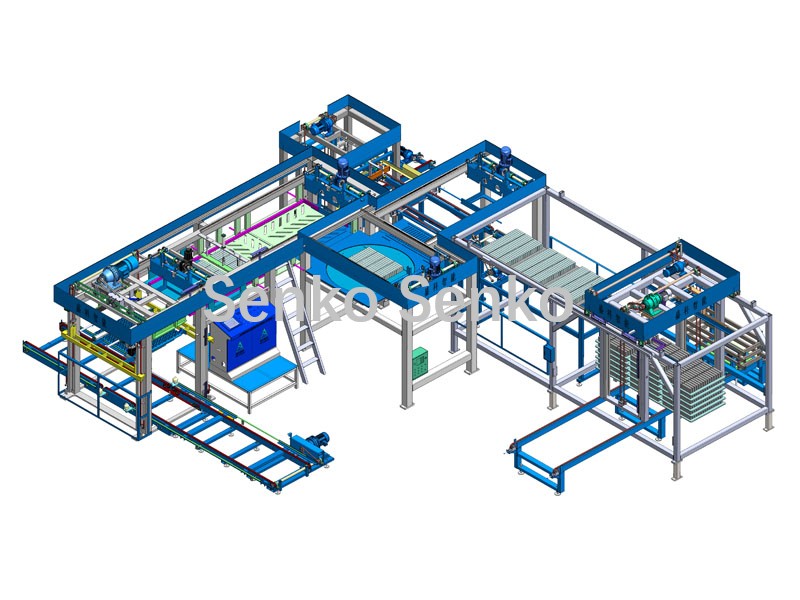
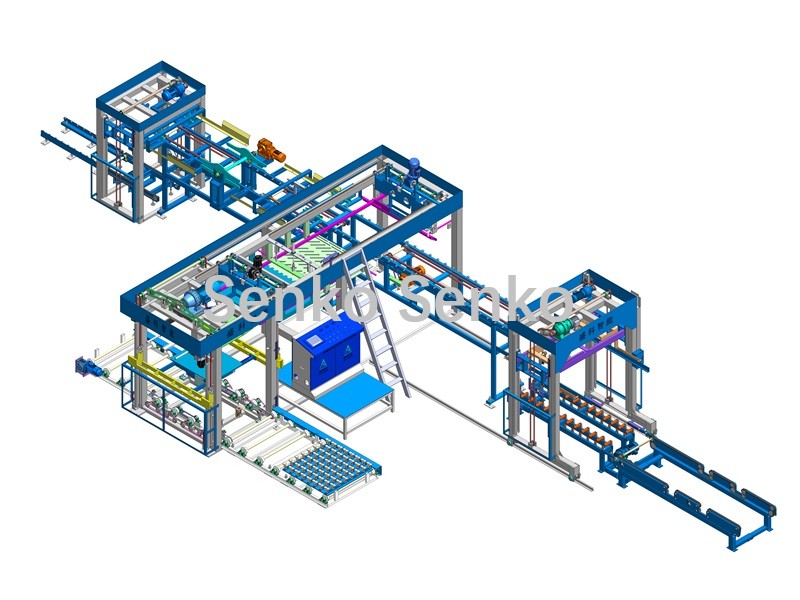
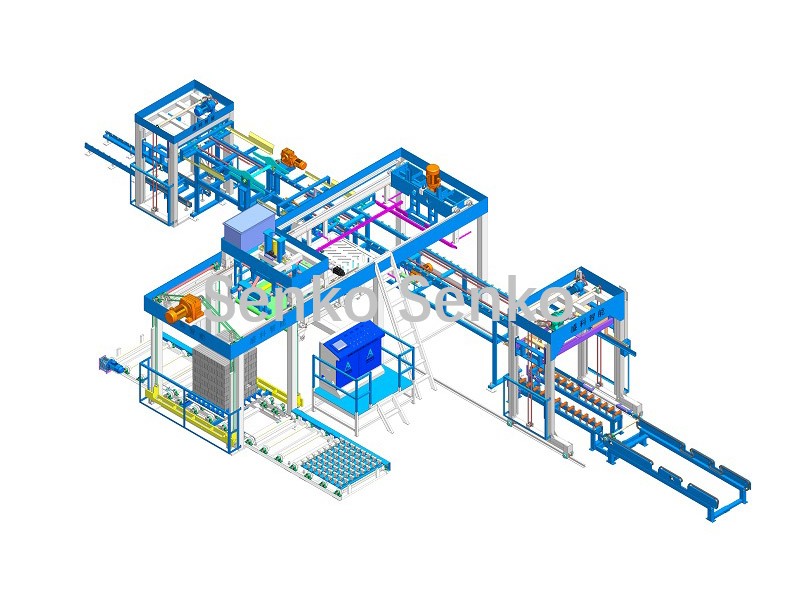
Automation is another defining trend, especially in fast‑growing hot climate markets. In the GCC, fully automatic block production lines lifted their market share from 32% in 2022 to 47% in 2026, as builders prioritise consistent dimensional tolerance and lower reject rates amid skilled labour shortagesKimberly M.... Regional players including Saudi Readymix have added battery‑electric loaders and yard handling equipment this year to cut diesel emissions at curing yards and raw material stockpiles, aligning production sites with national net‑zero construction procurement rules. Southeast Asian and Indian manufacturers, meanwhile, lean more toward semi‑automatic lines as a risk‑balanced middle path, avoiding heavy capital exposure while trimming labour waste.
Demand patterns are diverging sharply by region. The GCC market continues its robust expansion, forecast to grow at a 5.94% CAGR through 2031, underpinned by large residential and tourism infrastructure programmes. Many markets in North America and Western Europe see slower volume growth but stronger premium pricing for EPD‑certified, low‑embodied‑carbon blocks, as public and commercial project specifiers now require environmental product declarations for masonry materials. In contrast, markets with weak permitting, fragmented local competition and oversupply of small manual block plants remain trapped in price wars, where producers compete almost exclusively on unit price rather than sustainability credentials.
Industry analysts warn that the green transition is not automatically margin‑positive. New low‑carbon binders, carbon capture equipment, third‑party carbon verification and EPD certification add overhead. For the next 2–3 years, the low‑carbon block advantage will accrue most to producers that can charge a verified green premium to institutional buyers, rather than factories that simply swap raw materials and sell into undifferentiated commodity markets.
The near‑term outlook for 2026–2027 hinges on three variables: cement price stability, local construction tender pipelines, and the speed at which green building codes embed embodied carbon limits into standard masonry specifications. Block plants that combine high utilisation, local aggregate supply, automated quality control and a share of low‑carbon premium SKUs are positioned to outperform; operators relying only on standard hollow blocks face continuing margin compression.
Q: What is the main factor moving CMU profit margins in 2026? A: Capacity utilisation remains the single largest lever, followed by raw material transport cost and product mix. Low‑carbon upgrades can improve margins only when buyers pay a green premium.
Q: Are carbon‑negative concrete blocks commercially available now? A: Yes. Cement‑free, carbonated slag and recycled‑fines CMU lines are in commercial production in parts of Europe, while CO₂‑injection cement reduction systems are available as retrofits for existing block plants worldwide. Many options are still limited to projects with embodied‑carbon requirements.
Q: Why is automation growing fastest in the GCC block market? A: Tight skilled labour supply, large repeat infrastructure orders and strict consistency requirements for high‑rise and government projects make fully automatic lines attractive, even with higher capital expenditure.
Q: Can low‑carbon block technology be added to an existing semi‑automatic factory? A: Partial retrofits such as CO₂ injection, supplementary cementitious material dosing and recycled aggregate sorting are practical for most existing lines. Full cement‑free carbonation curing usually requires new process hardware.
Q: Will green building rules make standard grey hollow blocks obsolete soon? A: No. Conventional CMU will remain dominant for low‑spec local residential work for years. The main change is that large public and commercial projects will increasingly require low‑carbon alternatives or EPD documentation.
Q: What is the biggest risk for block manufacturers adopting green CMU products? A: Investing in decarbonisation equipment without secured premium contracts. Without buyers willing to pay extra for verified low embodied carbon, higher production and certification costs will erode margins.
Sales : No.33,Jinhe Avenue,Binjiang Development Zone, Daxiamei Area,Nanan County,Quanzhou City, Fujian,China
Call Us Now : +8615559090996
Email : senko@fjsenko.com