

Whether you're setting up a small workshop or a large-scale production line, choosing the right block forming machine is a critical decision. This guide breaks down the two main paths—manual and automatic machines—to help you understand their operation, output, and which one is the right fit for your project.
Manual vs. Automatic: A Quick Overview
To start, here’s a snapshot of what each type offers:
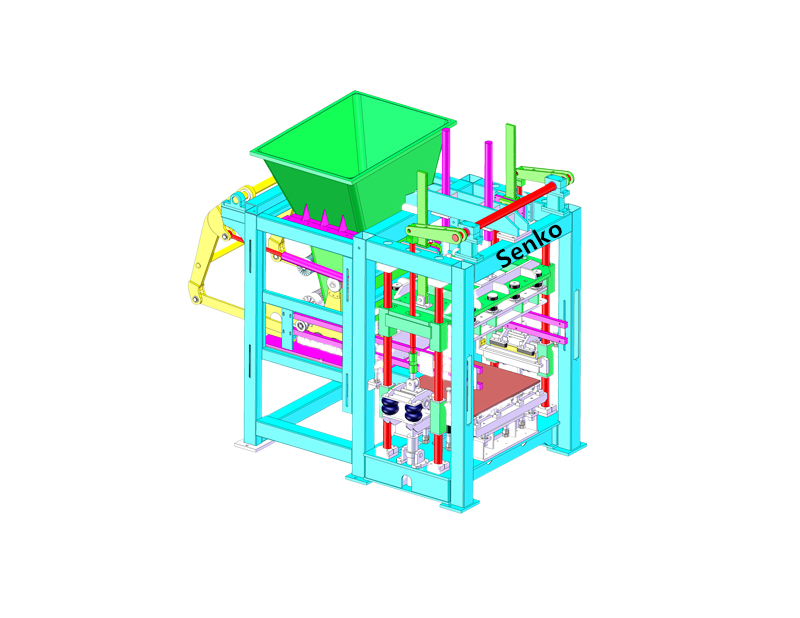
· Automation Level: Fully manual operation.
· Typical Output: 60-400 blocks per day.
· Labor Required: 2-6 people.
· Power Source: Human force or basic mechanical leverage.
· Key Advantage: Very low initial investment.
· Best For: Small-scale projects, remote locations, DIY builders, and soil block production.
Automatic Block Forming Machines
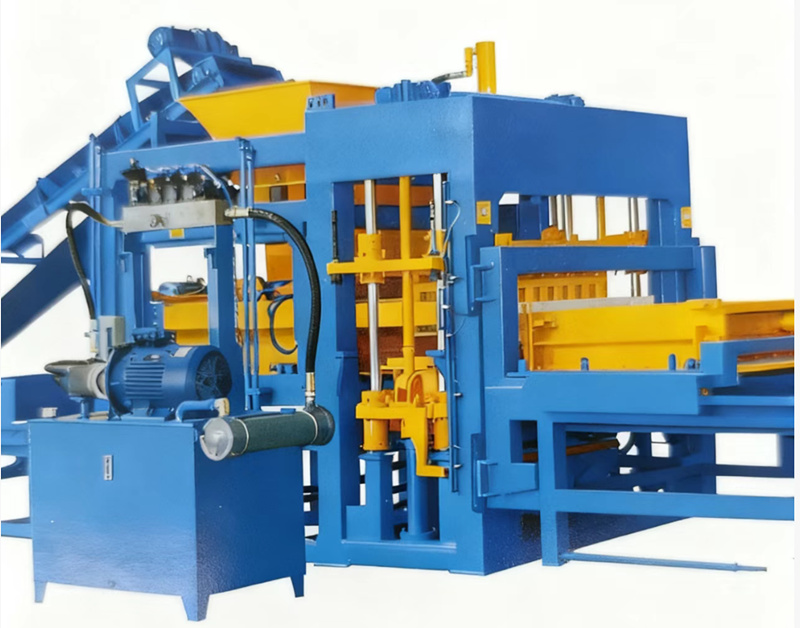
· Automation Level: Fully automated, computer-controlled cycles.
· Typical Output: 4,000-15,000+ blocks per shift (8 hours).
· Labor Required: Minimal (mainly for monitoring and maintenance).
· Power Source: Electric motors and hydraulic systems.
· Key Advantage: High, consistent output with minimal labor.
· Best For: Commercial production, large construction projects, and producing high-strength, uniform blocks.
Understanding Manual Block Presses
Manual machines are the most basic type, perfect for specific situations.
How They Work
These machines use pure mechanical force, often through a lever or toggle mechanism, to compress material in a mold. An operator fills the mold, manually applies pressure to form the block, and then releases the finished product.
What You Can Expect
· Output: Production is measured in blocks per day, not per hour. A crew might produce 150-400 blocks in a day, heavily dependent on crew size and stamina.
· Common Types:
· Soil Block Presses: Like the Meili 60 or Tek-Block, designed for stabilized earth construction.
· Simple Concrete Presses: Basic lever-operated machines for small concrete blocks or pavers.
Ideal Use Cases
· Building with Local Materials: Perfect for making compressed earth blocks (CEBs) using on-site soil.
· Ultra-Low-Budget Startups: The lowest barrier to entry for a block-making business.
· Community-Led or Self-Build Projects: Where labor is more available than capital for machinery.
Exploring Automatic Block Making Machines
Automatic machines represent the industrial standard for block production, offering a completely different level of efficiency.
How They Work
These are complex, integrated systems. The core process—feeding material, distributing it into molds, high-frequency vibration compaction, and block ejection—is entirely automated and controlled by a Programmable Logic Controller (PLC). Advanced features often include automatic pallet feeders and stackers.
What You Can Expect
· Output: Production is measured in blocks per shift. A standard machine can produce thousands of blocks in an 8-hour period.
· Key Advantages:
· Consistent Quality: PLC control and powerful vibration ensure every block has identical dimensions and high strength.
· Material Versatility: Can use standard concrete mixes as well as recycled materials like fly ash, slag, or crushed construction waste.
· Low Operational Labor: One operator can often manage the entire production line.
Ideal Use Cases
· Commercial Block Yards: Supplying the construction market with standard concrete blocks, pavers, and retaining wall units.
· Large Infrastructure Projects: Producing blocks on-site for big developments.
· High-Volume Production: Any operation where output, consistency, and speed are priorities.
The Middle Ground: Semi-Automatic & Mobile Machines
Not every project fits neatly into the manual or automatic categories. There's a practical middle ground.
Semi-Automatic "Egg-Layer" Machines
Machines like the BlocMatic 4 series are a hybrid. They are mobile, often engine-powered, and automate the vibration and molding process. However, operators manually feed material and move the machine after each cycle to "lay" blocks on the ground—hence the name "egg-layer." They offer a good balance, producing 180-360 blocks per hour with a small crew.
How to Choose the Right Machine for You
Your decision should be based on a realistic assessment of your needs:
· Assess Your Scale and Demand: How many blocks do you need per day or week? Manual presses max out at a few hundred, while automatics start in the thousands.
· Calculate True Costs: Consider the total cost. A manual machine is cheap to buy but expensive to operate due to high labor costs. An automatic machine requires a major upfront investment but has very low per-block labor costs.
· Evaluate Your Resources: Do you have reliable electricity or fuel for an automatic machine? Do you have a skilled workforce or access to technical support for maintenance?
· Define Your Product: Are you making simple solid blocks or specialized products like interlocking bricks, hollow blocks, or colored pavers? Automatic machines offer far greater versatility through mold changes.
Final Recommendations
· Choose a Manual Machine if: Your project is small, your budget is very tight, you are using on-site soil, or labor is readily available. Be prepared for physically demanding work.
· Choose an Automatic Machine if: You are running a commercial business, have a consistent large demand, need uniform and certified products, or want to minimize long-term labor costs and physical strain.
· Consider a Semi-Automatic if: You need higher output than a manual press can provide but aren't ready for the scale and investment of a full stationary automatic plant. They are excellent for medium-sized projects.
I hope this comparison helps clarify the right path for your block-making needs. If you can share more about your specific project scale, budget, and the type of blocks you want to produce, I can offer more tailored advice.
Sales : No.33,Jinhe Avenue,Binjiang Development Zone, Daxiamei Area,Nanan County,Quanzhou City, Fujian,China
Call Us Now : +8615559090996
Email : senko@fjsenko.com